Too Much of a Good Thing: How Endless Streaming Choices Are Secretly Killing Your Chill
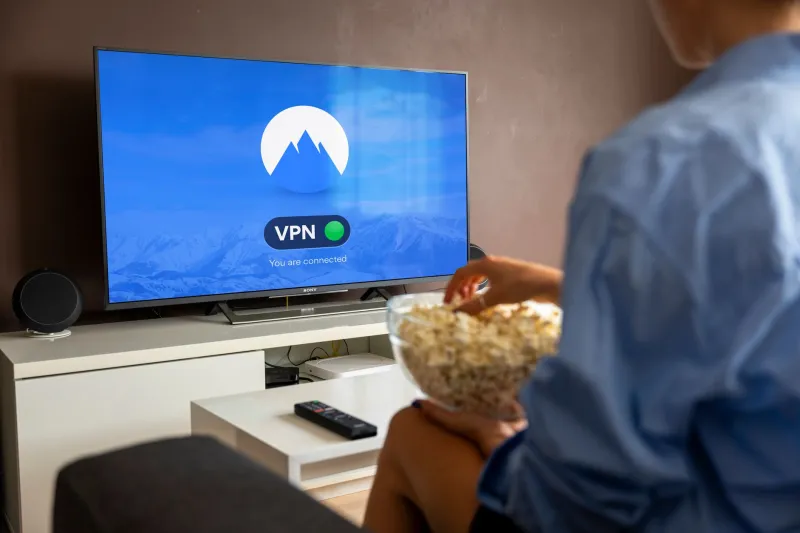
Picture this: It's Friday night, you've survived the week, the couch is calling your name, and you've got access to approximately 47,000 hours of TV shows, movies, documentaries, and reality competitions across your various streaming subscriptions. You should be thrilled. You should be living. Instead, you spend 40 minutes scrolling through thumbnails, feel vaguely anxious, and end up rewatching an episode of The Office you've already seen six times.
Congratulations. You've just experienced what psychologists call the paradox of choice — and honestly, you're not alone. Millions of Americans are quietly suffering through the same bizarre phenomenon every single weekend.
When More Becomes a Burden
Back in the early days of cable TV, you had maybe 60 channels and a TV Guide. The decision was simple: flip through what's on, pick something decent, and settle in. Nobody agonized over it. Nobody felt bad about watching whatever happened to be playing on TBS at 9 p.m. on a Saturday.
Fast forward to 2025, and the average American household subscribes to nearly four streaming platforms. Netflix alone has over 17,000 titles available in the US. Add Disney+, Max, Hulu, Peacock, Apple TV+, and whatever else you've signed up for during a free trial and forgotten to cancel, and you're staring down a content mountain so massive it's practically its own natural disaster.
Here's the cruel irony: research consistently shows that the more options we're given, the less satisfied we feel with whatever we ultimately choose. Psychologist Barry Schwartz literally wrote the book on this — called, fittingly, The Paradox of Choice — and his core finding is deceptively simple. When choices are limited, we pick something and enjoy it. When choices are unlimited, we pick something and immediately wonder if we made the wrong call.
That nagging little voice? "But what if the other thing was better?" That's not you being picky. That's your brain being completely overwhelmed by options it was never designed to handle.
The Algorithm Isn't Actually Helping You
Streaming platforms know this is a problem — which is why they've poured billions into recommendation algorithms designed to surface "the perfect thing" for you at any given moment. And yet, somehow, the scroll never ends.
Here's why: recommendation engines are optimized to keep you on the platform, not necessarily to help you find something you'll genuinely love and feel good about watching. Every time you hover over a thumbnail, you're feeding data back into a system that's designed to maximize your engagement time, not your happiness. Those two things are not the same.
There's also the problem of anticipation inflation. When a show has a 97% match rating and a glowing description and a trailer that hits just right, your brain has already built up expectations before you've watched a single frame. Real satisfaction rarely keeps pace with a perfectly curated hype cycle. So even when you find something genuinely good, it can feel like a letdown — because nothing lives up to the version your imagination already scripted.
Decision Fatigue Is Real, and It's Ruining Movie Night
Here's something your streaming service definitely doesn't want you to know: making decisions is exhausting. Psychologists call it decision fatigue, and it's the reason judges give harsher sentences later in the day and why you're more likely to grab fast food after a long shift than cook something healthy.
Every swipe through your content queue is a micro-decision. "Does this look interesting? Is this the right mood? Have I seen this before? Should I watch something new or something comfortable?" By the time you've scrolled through 200 thumbnails, your brain is genuinely tired — and a tired brain defaults to the path of least resistance, which is usually either giving up entirely or defaulting to something familiar.
This is why so many of us end up rewatching comfort shows we've already memorized. It's not laziness. It's your exhausted decision-making brain taking a well-earned break from the paradox it's been stuck in for the past 45 minutes.
So What Do You Actually Do About It?
Good news: you don't have to cancel all your subscriptions and go back to antenna TV (though, honestly, free local channels have been having a moment lately). There are some genuinely practical ways to fight back against the scroll spiral.
Set a two-minute rule. Give yourself exactly two minutes to pick something. If you haven't committed by then, go with whatever you've been hovering over longest. Your gut reaction is usually more reliable than your overthinking.
Use external curation. Ask a friend what they're watching. Check a single trusted review source. Follow a pop culture newsletter. Letting someone else do the filtering work removes the burden from your already-taxed brain and actually makes the recommendation feel more meaningful.
Create a personal watchlist with a hard cap. Keep your "to watch" list to ten titles maximum. When you add something new, something else has to come off. Scarcity, even artificial scarcity, restores the feeling of anticipation that unlimited libraries kill.
Embrace the re-watch without guilt. Seriously. Comfort viewing is not a failure state. Research suggests that revisiting familiar content can actually reduce anxiety and provide genuine emotional comfort. If you want to watch Parks and Recreation for the fourth time, that's not a waste — that's self-care with better jokes.
Schedule your entertainment. This sounds aggressively un-fun, but hear it out. When you designate "we're watching a movie tonight" as an actual event rather than a passive default, you're more likely to commit to a choice and enjoy it. Treating it like a Friday night ritual rather than background noise changes the whole experience.
The Real Flex Is Knowing When to Log Off
At the end of the day — or, more accurately, at the end of a two-hour scroll session where you watched nothing — the most radical thing you can do is close the app entirely. Go for a walk. Call someone. Read something. Play a game. The entertainment will still be there.
Unlimited access has quietly trained us to believe that the perfect watch is always one more scroll away. But the joy was never really in the finding. It was always in the watching — and you can't do that if you never actually pick something.
So next time you open your streaming app and feel that familiar low-grade dread creeping in, remember: the paradox of choice is real, it's not your fault, and the antidote is embarrassingly simple. Just pick something. Anything. The couch doesn't care what you watch. It just wants you to sit down and relax already.