Glorious Disaster: How 'Chaotic Comfort' TV Became America's Favorite Guilty Pleasure
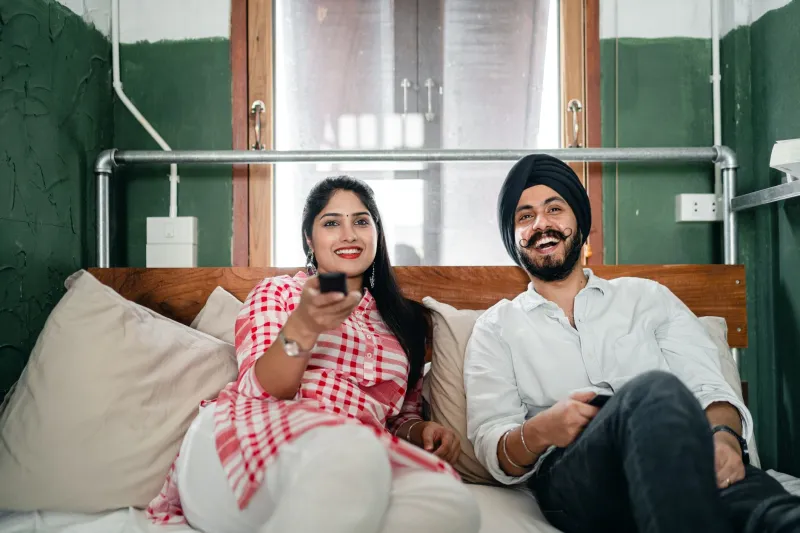
There's a specific kind of joy that comes from watching someone else's life implode on national television. Not a mean-spirited joy — more like the warm, fuzzy feeling of realizing you're not alone in your own messiness. That's the secret sauce behind what pop culture observers are calling chaotic comfort TV, and honestly? It's having a full-on cultural moment.
Forgot to meal prep this week? Cool, at least you didn't have a meltdown at a gender reveal party that was caught on three camera angles and a ring doorbell. We've all got our chaos. Some of us just have a production crew filming ours.
What Exactly Is 'Chaotic Comfort' TV?
Let's define the term before we go any further. Chaotic comfort TV isn't just reality TV — it's the specific subgenre where dysfunction is the point. Think shows like Love Is Blind, where people propose to strangers they've never seen, or 90 Day Fiancé, which has spawned approximately 47 spinoffs all centered on relationships held together with hope and international flight miles. It's The Real Housewives franchise imploding dinner parties in real time. It's Married at First Sight couples realizing on their wedding day that this was, in hindsight, a terrible plan.
These aren't shows about people winning or succeeding. They're shows about people trying, failing, crying, and occasionally throwing wine glasses. And we cannot get enough.
Ratings back this up in a big way. 90 Day Fiancé regularly pulls in more viewers than plenty of prestige dramas. The Real Housewives of Salt Lake City sparked genuine national conversation when its drama escalated to FBI investigations. Love Is Blind Season 6 broke Netflix viewership records. The messier it gets, the more we tune in.
The Psychology of Watching Things Fall Apart
So why are we drawn to it? Turns out, there's actual science lurking behind your Sunday night binge.
Psychologists point to something called downward social comparison — basically, when we watch people struggling harder than we are, it makes us feel better about our own situations. It's not that we want these people to fail, exactly. It's that their chaos makes our own Tuesday-morning arguments about who forgot to buy oat milk feel pretty manageable by comparison.
There's also a strong argument around authenticity fatigue. For years, reality TV tried to be aspirational — perfect homes, perfect bodies, perfect relationship arcs. Shows like early-era The Bachelor presented love as a series of helicopter dates and rose ceremonies in Tuscany. And while that still has its audience, a growing chunk of viewers started craving something that felt more... real. Even when "real" means watching two people who met six weeks ago try to navigate a cross-continental marriage while one of them still lives with their parents.
Dr. Pamela Rutledge, a media psychologist who has written extensively on audience behavior, has noted that reality TV functions as a kind of social mirror. We process our own emotions by watching others navigate theirs — even when (especially when) those others are doing it spectacularly badly.
The Shift from Aspiration to Identification
Here's where it gets genuinely interesting from a cultural standpoint. The entertainment landscape used to be built on aspiration. We watched Friends and wanted to live in that impossible Manhattan apartment. We watched Sex and the City and wanted Carrie's shoe collection (and somehow her rent). TV was a fantasy delivery system.
But something shifted, particularly post-2020. Audiences started gravitating toward content that acknowledged difficulty rather than papering over it. The pandemic, economic anxiety, social media's relentless highlight-reel culture — all of it created a viewer who was exhausted by perfection. When everything in your actual life feels uncertain, watching a polished, tidy narrative can feel alienating rather than comforting.
Chaotic comfort TV says: hey, life is a lot, and here are some people proving it. There's genuine relief in that.
Producers have clearly caught on. Shows are increasingly leaning into the mess rather than trying to smooth it out. Confessional cam moments are longer and more emotionally raw. Reunions are structured specifically to maximize confrontation. The editing is sharper, the drama is amplified, and the cast selections seem deliberately designed to create maximum interpersonal friction.
Family Chaos Gets Its Own Lane
It's not just dating shows driving this trend. Family-centered chaos content has exploded too. Shows like Welcome to Plathville — which follows a deeply sheltered family navigating the outside world — or OutDaughtered and its extended TLC universe pull in viewers who find something weirdly grounding about watching other families navigate their specific brand of dysfunction.
Even competition shows have gotten in on it. The Traitors (the US version hosted by Alan Cumming in a Scottish castle, because of course) became a breakout hit largely because of how spectacularly its contestants fell apart under pressure. The strategy was secondary to the emotional implosions.
Are We Watching or Are We Participating?
One underrated element of chaotic comfort TV is how social media has transformed the viewing experience. You're not just watching Love Is Blind — you're watching it while simultaneously reading 400 tweets about it, joining a Reddit thread dissecting whether a certain cast member is actually a villain or just misunderstood, and sending reaction GIFs to your group chat.
The show becomes a shared cultural event, a communal experience of collective chaos-processing. It's appointment television in the truest sense — not because you'll miss the plot if you skip it, but because you'll miss the conversation.
That communal element might be the most important piece of the puzzle. In an era where genuine community can feel hard to find, bonding over the spectacular mess of strangers on TV is — surprisingly — a real form of connection.
So Should We Feel Guilty About It?
Short answer: nah.
Longer answer: the "guilty pleasure" framing has always been a little condescending. Enjoying chaotic comfort TV doesn't mean you've given up on serious art or nuanced storytelling. It means you understand that entertainment serves different purposes at different times, and sometimes the purpose is to sit on your couch, eat something you probably shouldn't, and watch a man in his thirties cry because he got eliminated from a dating show after two weeks.
That's a completely valid way to spend an evening. Wapipi fully endorses it.
The rise of chaotic comfort TV is ultimately a story about audiences demanding content that meets them where they are — messy, overwhelmed, and looking for something that feels honest even when it's completely over the top. Hollywood is finally listening. The chaos is only going to get more comfortable from here.