Why Your Brain Is Basically Addicted to Bad News (And What to Actually Do About It)
You're Not Weak — You're Just Human
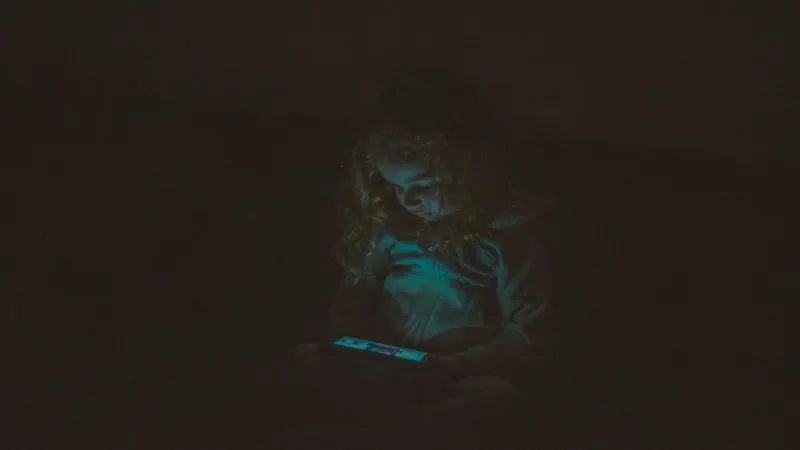
Let's set the scene: It's 10 PM, you're cozy on the couch, and you pick up your phone for what you swear will be a five-minute check-in. An hour later, you've somehow consumed seventeen anxiety-inducing headlines, three videos of political chaos, and a comment thread that made your blood pressure spike. You feel terrible. You also cannot stop.
Welcome to the doom scroll paradox — the very modern phenomenon where we voluntarily marinate in content that makes us miserable, then keep going back for more. If this sounds embarrassingly familiar, you're in excellent company. According to a 2023 survey by the American Psychological Association, nearly 70% of Americans reported that keeping up with the news caused them significant stress. And yet, here we all are, refreshing our feeds like digital masochists.
So what gives? Why do our brains keep dragging us back to the very thing making us feel awful?
The Science of Why Bad Feels So Good (Or At Least, Irresistible)
Here's the uncomfortable truth: your brain is not actually malfunctioning. It's doing exactly what it evolved to do — scan for threats. Back when humans were navigating actual predators and rival tribes, staying alert to danger was a genuine survival skill. Fast forward to 2024, and that same ancient threat-detection system is now being weaponized by your social media algorithm.
Every scary headline, every piece of outrage bait, every "you won't believe what just happened" notification triggers a small but real neurological response. Your brain releases a little hit of cortisol (the stress hormone) and simultaneously keeps you locked in a state of hypervigilance — essentially telling you you can't look away because you might miss something important. It's the digital equivalent of rubbernecking at a car accident, except the accident never ends and there's always a new one just below the fold.
On top of that, there's the dopamine loop. Social media platforms are engineered — and this is not a conspiracy theory, it's literally what tech designers have admitted — to deliver variable rewards. Sometimes you scroll and find something interesting or funny. Sometimes it's horrifying. That unpredictability is exactly what makes slot machines addictive, and it works the same way on your phone. Your brain keeps pulling the lever hoping for a jackpot, and it doesn't really care if the jackpot is a cute dog video or a geopolitical meltdown.
The Mood Hangover Is Real
Here's where it gets genuinely worth paying attention to: the effects of doomscrolling don't just evaporate when you finally put your phone down. Researchers at the University of Essex found that heavy consumption of negative news was significantly associated with increased anxiety, poor sleep quality, and a general sense of helplessness — what some psychologists are calling "headline stress disorder."
That foggy, low-grade dread you sometimes wake up with? The inexplicable sense that everything is terrible even though your personal life is technically fine? A lot of that can be traced back to what you consumed the night before. Your brain doesn't fully distinguish between things happening to you and things you watched happening to someone else. It processes both as experiences, which means a two-hour scroll through disaster content essentially registers as two hours of lived stress.
And the really sneaky part? Doomscrolling often masquerades as being informed, responsible, or engaged. It can feel productive to stay on top of the news cycle. But there's a significant difference between being genuinely informed and being caught in an anxiety spiral dressed up as civic duty.
So How Do You Actually Break the Cycle?
The good news is that you don't have to go full off-grid hermit or delete every app on your phone. The goal isn't zero news — it's smarter consumption. Here are some strategies that actually work:
Set a "news window" and stick to it. Give yourself one or two designated times per day to check headlines — say, 15 minutes in the morning and 15 minutes after dinner. Outside those windows, the feed stays closed. It sounds rigid, but it works because it removes the endless-availability factor that makes scrolling so hard to stop.
Swap the algorithm for editorial curation. Instead of letting a platform's engagement-optimized algorithm decide what you see, choose a few trusted news sources and go to them directly. Newsletters are great for this — you get a curated digest without the infinite scroll format that's designed to keep you trapped.
Use the "does this help me?" test. Before clicking on a story, ask yourself: will reading this actually change anything I can do today? If the answer is no — if it's pure anxiety fuel with zero actionable value — give yourself permission to skip it.
Replace the habit, don't just remove it. The urge to pick up your phone and scroll is often less about the content and more about the habit loop itself — boredom, a need for stimulation, a way to decompress. If you just try to stop without replacing the behavior, you'll fail. Instead, keep something genuinely enjoyable nearby: a game, a playlist, a funny show, a group chat with friends. Give your brain the entertainment hit it's actually looking for.
Mute liberally and without guilt. Most social platforms let you mute keywords, accounts, or topics. Use this aggressively. Muting a topic doesn't mean you don't care about it — it means you're choosing how and when you engage with it, which is a completely sane thing to do.
The Real Flex Is Choosing What You Let In
Here's the reframe that might actually stick: in a media landscape specifically designed to capture and hold your attention by any means necessary, being intentional about what you consume is a form of self-respect. It's not checking out — it's opting in on your own terms.
You can stay informed, engaged, and culturally in-the-loop without handing your nervous system over to an algorithm. The news will still be there during your designated windows. The memes will still circulate. You won't miss anything truly important.
What you will miss is the low-level, chronic stress that comes from letting your phone run your emotional state. And honestly? That sounds like a pretty good trade.
Your brain is smart. Give it better things to do.