Two Remotes, Zero Consensus: The Real Reason You and Your Partner Can Never Pick Something to Watch

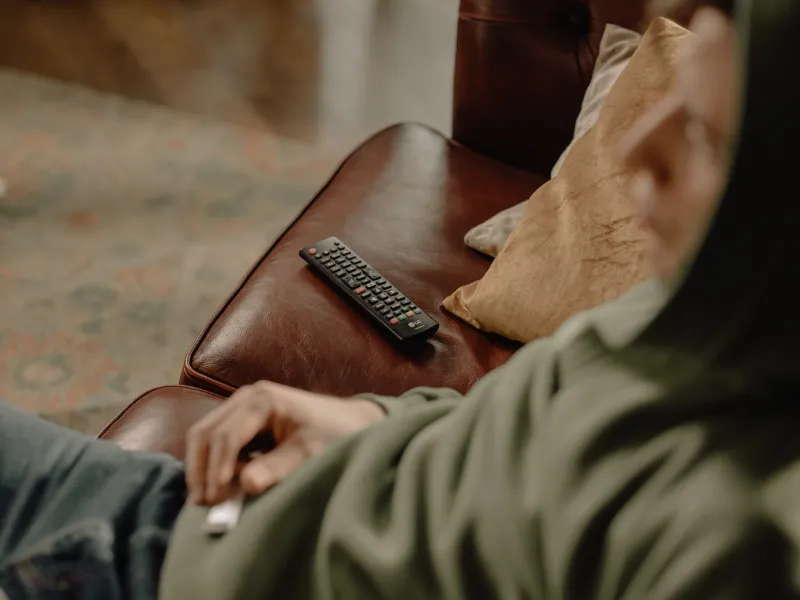
Photo by Photo by Vitaly Gariev on Unsplash on Unsplash
It starts innocently enough. You finish dinner, sink into the couch, and one of you picks up the remote. Forty-five minutes later, you've scrolled through three platforms, vetoed a dozen options, and somehow ended up more stressed than you were during the actual workday. The show you eventually pick? Probably something neither of you was that excited about.
If this is your Friday night ritual, you're in very good company. The 'nothing to watch' standoff has become one of the most universally complained-about relationship experiences in America — right up there with arguing about the thermostat and whose turn it is to unload the dishwasher. But here's the thing: the conflict isn't really about the shows. It runs a lot deeper than that.
Your Personality Is Basically Your Remote Control
Psychologists who study entertainment preferences have found that what we watch is closely tied to our underlying personality traits. People who score high in openness to experience — think curious, imaginative, always down for something new — tend to gravitate toward complex dramas, foreign films, and prestige TV that requires active attention. Meanwhile, people higher in agreeableness and conscientiousness often prefer feel-good content, familiar formats, and shows where you already know things are going to work out okay.
Neither type is wrong. But put them on the same couch and you've got a built-in standoff.
Then there's the introvert/extrovert dimension. Introverts frequently use entertainment as genuine downtime — a way to fully decompress after a socially demanding day. Extroverts, on the other hand, often want entertainment that feels energizing, social, or at least fun enough to talk about afterward. One person wants Succession. The other wants The Great British Bake Off. Both of them are just trying to recover from Tuesday.
The Generational Gap Nobody Talks About
Age and generation play a surprisingly big role in this too, even in relationships where partners are close in age. If one of you grew up on appointment TV — the kind where you gathered around the set at 8 PM or missed it forever — you likely developed a different relationship with storytelling pacing than someone who grew up streaming on demand.
Older millennials and Gen X viewers often have a higher tolerance for slow-burn narratives, multi-season character arcs, and ambiguous endings. Younger millennials and Gen Z viewers, who came of age with YouTube, TikTok, and on-demand everything, frequently prefer tighter pacing and faster payoffs. This isn't about attention spans — it's about what you were trained to expect from a screen.
Throw in different pop culture reference pools — one partner who grew up with The Sopranos as the gold standard of TV, another who thinks peak television was Avatar: The Last Airbender — and you've got two people who fundamentally disagree on what 'good' even means.
The Veto Problem
Here's where it gets really interesting. Research on decision-making suggests that the more options we have, the more likely we are to make no decision at all — a phenomenon called the paradox of choice. Streaming platforms have essentially turned this into a spectator sport.
But the standoff isn't just about too many options. It's about the power dynamics of the veto. When one partner keeps shooting things down, the other person stops suggesting. Eventually, nobody's putting anything real on the table because nobody wants to be rejected again. You end up picking the least-offensive option rather than something either of you actually wants to watch.
This is surprisingly similar to how couples end up picking restaurants. The person who says 'I don't care, you pick' actually does care — they just care more about avoiding conflict than getting what they want. Which, over time, breeds low-grade resentment about a lot more than dinner.
Practical Moves That Actually Work
So what do you actually do about it? A few strategies that couples have found genuinely helpful:
The Two-Veto Rule. Each person gets exactly two hard vetoes per session. After that, you have to engage with what's on the table rather than just rejecting it. This forces both people to be more intentional about what they're actually saying no to.
The Alternate Pick System. Sounds simple, but it works. You picked last time, they pick this time. No negotiating, no lobbying — just genuine turns. The key is that you both agree to actually watch the pick with good faith engagement, not passive aggressive sighing.
The Genre Overlap Map. Sit down outside of TV time and each list five genres or shows you genuinely love. Then look for overlap. You might discover that one of you loves thrillers and the other loves character-driven stories — and that something like Ozark or The Americans hits both. You won't know until you actually compare notes.
The 'One Each' Night. Some couples swear by a simple split: one night a week is your pick, one night is theirs, no questions asked. The person not picking has to give it a genuine shot for at least two episodes before calling it.
The Part Nobody Mentions: Your Differences Are Actually Kind of Great
Here's a reframe worth considering. The fact that you and your partner don't have identical taste in entertainment isn't a flaw in the relationship — it's actually a feature.
Shared viewing is one of the most consistent ways couples report feeling connected. But discovering something together — a show that neither of you would have found solo — creates a specific kind of intimacy that rewatching your own favorites just doesn't. When your partner drags you into a show you'd never have picked and you end up obsessed with it, that becomes a shared story. That becomes something that belongs to the two of you.
Some of the most beloved 'couple shows' in American households started as one person's reluctant compromise. Schitt's Creek. The Bear. Abbott Elementary. Somebody had to be talked into it first.
The remote isn't the enemy. The scroll isn't the enemy. If anything, the standoff is just two people trying to protect their limited downtime — which is actually a pretty human thing to do. The trick is remembering you're on the same team, even when you're definitely not watching the same genre.
Now put down the remote for a second and just ask each other what you're actually in the mood for. You might be surprised.