Can't Sit Through a Movie Anymore? Here's What's Actually Going On

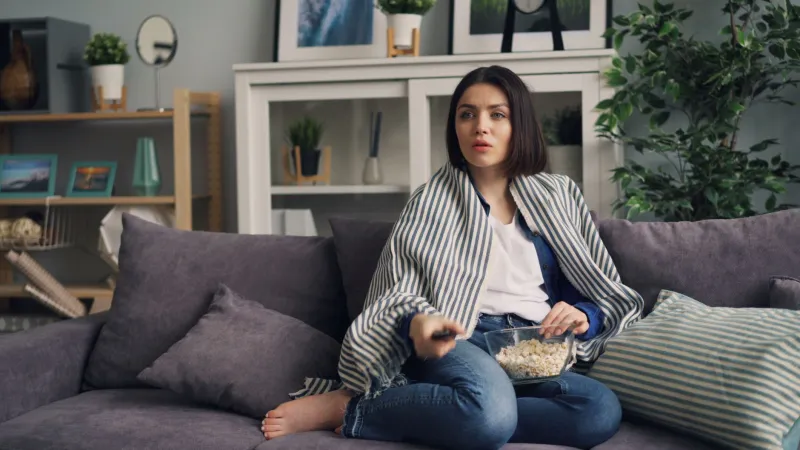
Picture this: It's Friday night, you've been looking forward to this movie all week, you've got snacks, the lighting is right, you're actually comfortable. Fifteen minutes in, your hand is moving toward your phone before you've even consciously decided to reach for it.
You put it down. You refocus. Seven minutes later, your hand does it again.
If this sounds familiar, welcome to one of the stranger cultural side effects of the TikTok era — a growing inability to sit with entertainment that doesn't deliver a hit every few seconds. And while it's tempting to feel bad about it, understanding what's actually happening makes it a lot easier to do something about it.
The Algorithm Did This on Purpose (Sort Of)
Short-form video platforms aren't accidentally addictive. The entire architecture of TikTok, Instagram Reels, and YouTube Shorts is engineered to exploit a very specific quirk in human attention: we're wired to respond to novelty.
Every new video is a tiny dopamine event. A new face, a new sound, a new topic, a new emotional tone — all within fifteen seconds to three minutes. The feed never stops. There's no natural endpoint, no resolution, no moment where your brain gets to say "okay, that's complete, I can relax now." Just an infinite carousel of micro-novelty.
Spend enough time in that environment — and most Americans are spending a lot of time there, with studies suggesting average TikTok users clock well over an hour daily — and your brain starts recalibrating what counts as a normal entertainment pace. The standard becomes: new stimulus every few seconds, or something's wrong.
Then you sit down to watch a two-hour film with a thirty-minute first act, and your nervous system is genuinely confused. Where's the next hit? Why is this taking so long? Is something broken?
It's Not Just Attention Span — It's Tolerance for Ambiguity
Here's a nuance that doesn't get talked about enough: what short-form video erodes isn't just the ability to sit still. It's the comfort with not knowing where something is going.
A good movie, a great TV drama, a documentary worth watching — all of them require you to tolerate a period of setup, of unresolved tension, of not yet understanding the point. That tolerance is a skill, and like any skill, it weakens when you stop using it.
On TikTok, you know within three seconds whether a video is for you. If it isn't, you scroll. The algorithm learns. The next video is better calibrated. You never have to sit with uncertainty for more than a moment.
Long-form content asks you to extend trust over a much longer period. To believe that the slow scene is building toward something. To stay present with discomfort. That's genuinely harder to do when your entertainment diet has been optimized to eliminate discomfort at the speed of a thumb swipe.
The Backlash Is Real and It's Growing
But here's the part of this story that doesn't get nearly enough coverage: people are fighting back, and they're winning.
Across Reddit, TikTok itself (somewhat ironically), and various corners of the internet, a growing number of people — especially younger users who grew up with short-form video — are documenting their deliberate attempts to reclaim long-form attention. "Slow TV" content, where hours of uninterrupted train journeys or fireplace footage plays with no commentary, has developed a surprisingly large following. "Deinfluencing" trends regularly include people announcing they're deleting TikTok to recover their ability to read books or watch films.
The cinema industry has also noticed something interesting: despite all the hand-wringing about attention spans, theatrical attendance for genuinely immersive experiences — IMAX, premium large format, Dolby — has held up better than standard screenings. People will commit to long-form content when the environment makes distraction harder and the experience is worth protecting.
This suggests the issue isn't that people can't engage with longer formats. It's that the default home environment makes it too easy not to.
The Phone Is the Problem More Than the Content
Researchers studying media consumption have made a fairly consistent finding: the mere presence of a smartphone in the room reduces cognitive engagement with other media, even when the phone isn't being used. Your brain allocates some of its attention to monitoring the device — anticipating notifications, weighing the option to check it — and that divided focus degrades the quality of whatever else you're trying to experience.
This means a significant chunk of what feels like "I can't get into this movie" is actually "I can't get into this movie while my phone is within reach." Removing the variable removes a lot of the problem.
The people who report successfully reclaiming their long-form attention almost universally describe some version of the same practice: phone in another room, not just face-down on the cushion beside them. It sounds almost embarrassingly simple. It works.
Practical Ways to Get Your Long-Form Brain Back
If you want to actually rebuild your capacity for longer entertainment — and plenty of people do, because the payoff of a great two-hour film is genuinely different from anything a sixty-second clip can deliver — here's what tends to work.
Start shorter than you think you need to. Don't begin your recalibration by attempting a three-hour Scorsese epic. Start with a tight ninety-minute film or a forty-minute prestige TV episode. Build the muscle before you test it.
Make the environment do the work. Phone in another room. Lights appropriately dim. If you're watching on a laptop, full screen, no other tabs. The fewer outs you give yourself, the less willpower you need to stay present.
Give everything a twenty-minute runway. Commit to not making a judgment call on any piece of content until twenty minutes in. Most great films take at least that long to establish their rhythm. You're not obligated to finish anything — but give it the runway before deciding.
Use short-form video intentionally, not habitually. The issue isn't TikTok existing. It's TikTok as a default filler activity. Designate specific times for short-form browsing and treat long-form watching as a separate, protected activity with different rules.
Watch with someone else sometimes. Social accountability is genuinely powerful here. You're far less likely to reach for your phone when someone next to you is invested in the same thing.
The Payoff Is Worth It
Here's the honest truth: the kind of emotional experience that a great film or a slow-burn series can deliver is not available in sixty-second increments. The feeling of being genuinely transported, of having your worldview quietly shifted, of finishing something and needing a moment before you can talk about it — that requires time and sustained attention.
Short-form video is fun. It's genuinely entertaining. Nobody needs to feel guilty about it. But it's not a replacement for the other kind of watching, any more than a handful of crackers replaces an actual meal.
Your long-form attention isn't gone. It just needs a little coaxing back.